
How ewelry Studio Owners Can Expand Inventory with Wholesale Gem Rings
Independent studio owners constantly balance custom benchwork with the financial necessity of maintaining populated showcases. Handcrafted, bespoke commissions demand significant labor hours, creating operational bottlenecks during peak holiday seasons and spring bridal surges. When bench jewelers spend hours casting, fabricating, and setting every single piece on display, display trays remain sparse, capital gets tied up in raw materials, and walk-in clients seeking immediate purchases are left without options. Integrating pre-manufactured wholesale gem rings into showroom displays addresses these operational constraints. By blending studio-crafted masterworks with high-grade, pre-finished gemstone mountings, independent retailers immediately scale inventory turnover, broaden price-point accessibility, and stabilize cash flow without compromising design integrity or overburdening bench capacity.
Cool-Tone Engineering and Metallurgical Contrast
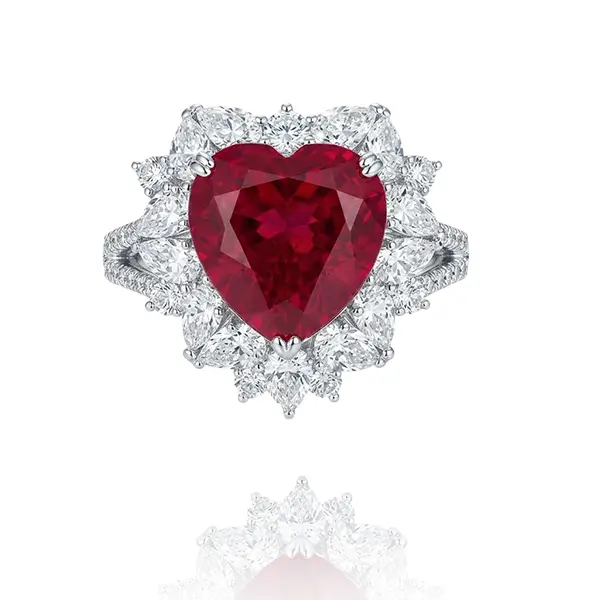
Metal selection drastically impacts stone appearance, optical contrast, and long-term wear performance. A well-constructed lab created ruby ring white gold piece harnesses high visual contrast by pairing the deep crimson saturation of synthetic corundum with a clean, highly reflective precious metal substrate. White gold formulations typically blend pure gold with white alloy metals such as nickel, palladium, or manganese, finished with a thin, durable micro-layer of electroplated rhodium. This bright silver surface reflects ambient light back into the gemstone’s pavilion, enhancing the vivid blue undertones characteristic of high-purity laboratory-grown rubies. For studio jewelers, ensuring that wholesale white gold mountings utilize palladium-rich alloys reduces allergic reactions among sensitive clients, while heavy rhodium plating (1.0 to 1.5 microns) guarantees superior tarnish resistance and luster. Common setting styles—such as four-claw prongs, sleek channel bands, and vintage-inspired halos—provide secure mechanical retention, protecting the ruby’s delicate girdle edges from impact during everyday wear.
Warm Metal Harmony and Heritage Styling Options
Traditional warm metal settings remain dominant in vintage, heirloom, and everyday luxury markets. Offering a lab created ruby ring yellow gold variation caters to clients drawn to classical elegance, warm skin tones, and rich historical design aesthetics. The natural yellow hue of 14-karat or 18-karat yellow gold—achieved by balancing precise ratios of silver, copper, and pure gold—softens the stark optical brilliance of the center stone, creating a warm, regal halo effect. In yellow gold mountings, design techniques such as fine milgrain detailing, intricate filigree gallery work, and side-stone halo accents elevate visual density while securely encasing gems ranging from subtle 1.0-carat solitaire cuts to substantial 5.0-carat statement stones. Having both cool-tone white gold and warm-tone yellow gold inventory readily available side-by-side in your showcase allows studio sales staff to perform immediate live comparisons, accelerating client decision-making and increasing retail conversion rates.
Technical Intake, Quality Control, and Bench Modifications
Sourcing finished inventory from external manufacturing partners requires strict quality control processes before items reach retail trays. Studio bench jewelers must evaluate incoming shipments using high-magnification loupes and stereomicroscopes to inspect for casting defects, micro-porosity, and fragile solder seams along the inner shank. Shank thickness must be evaluated carefully; commercial rings should feature solid lower shanks with a minimum wall thickness of 1.5 millimeters to ensure the ring can be safely resized up or down by two full sizes without structural warping or stone displacement. Furthermore, gallery under-bezel designs should permit comfortable cleaning access, allowing ultrasonic waves and steam jets to clear built-up skin oils and debris from the pavilion facets, preserving maximum optical brilliance over years of wear.
Strategic Merchandising and Profitability Metrics
Blending commercial finished inventory with custom bench offerings transforms the financial dynamic of an independent jewelry studio. Commercial lab-grown corundum offers stable, highly predictable component pricing unaffected by the radical price fluctuations associated with mined gemstone markets. Studio owners can establish reliable keystone or triple-keystone retail markups on pre-manufactured ring inventory, generating healthy profit margins that fund in-house raw material purchases and specialized bench equipment upgrades. By organizing display trays around cohesive color themes, stone cuts, and metal finishes, independent studios construct a sophisticated retail environment that delivers immediate gratification to buyers while leaving bench hours free for high-margin custom design work.

Sorting Procedures for Bulk Lab Created Ruby Loose Parcel
Receiving large commercial shipments of synthetic corundum requires systematic intake screening. For fine jewelry manufacturers, jewelry studio owners, and wholesale distributors, establishing a standardized sorting workflow eliminates costly mounting downtime and ensures seamless automated setting assembly. When receiving a fresh shipment of high-volume lab created ruby loose gems, sorting technicians must first establish a clean, color-neutral workstation using color-corrected daylight lamps rated between 5500K and 6500K.
The initial phase utilizes precision gemological sieves to divide the shipment into tight millimeter categories. Sizing tolerances in automated micro-pave casting lines must not exceed +/- 0.05 millimeters. Any dimensional drift beyond this tolerance causes setting failures, uneven prong alignment, or loose fits in high-end production lines.
Luminescence and Ultraviolet Emission Analysis
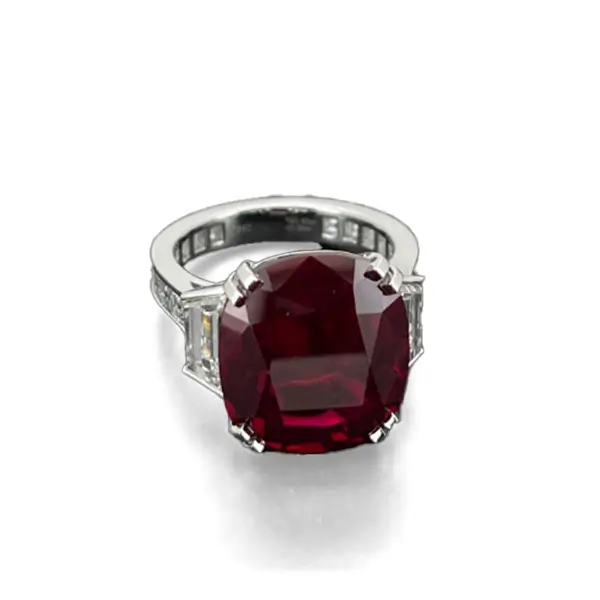
Ultraviolet evaluation serves as a rapid, non-destructive diagnostic step during bulk intake. Quality control teams often evaluate photoluminescence when assessing growth methods, raising the practical technical question of do lab created rubies fluoresce under standard shortwave and longwave inspection lamps. Synthetic rubies composed of aluminum oxide laced with chromium exhibit intense red fluorescence because laboratory growth environments strictly exclude iron.
Iron acts as an optical quencher in natural gems; its absence in cultivated corundum results in vivid photoluminescence. When operators verify whether do lab grown rubies glow under uv light with strong red emissions, they are witnessing the excitation of chromium ions uninhibited by iron impurities. Flame-fusion material typically displays extremely strong, uniform red glow under longwave UV (365nm), whereas flux-grown gems may show subtle variations based on flux chemistry. Detecting uniform luminescence across a parcel confirms consistent growth conditions and flags unintended glass or cubic zirconia contaminants immediately.
Optical Clarity and Internal Structure Sorting
Following dimensional and ultraviolet screening, gems undergo microscopic examination under 10x to 40x magnification using darkfield illumination. Technicians evaluate internal growth characteristics to separate commercial grades from top-tier stones. Flame-fusion stones require inspection for curved growth striae and microscopic gas bubbles, which indicate rapid crystallographic buildup. Hydrothermal and flux-grown stones present flux inclusions or chevron growth patterns that closely mimic high-grade natural corundum.
Color sorting requires establishing master stones to categorize parcels into distinct color bands: classic pigeon-blood red, vivid pinkish-red, and deep burgundy. Sorting technicians isolate pieces with uneven color distribution or heavy zoning to maintain batch consistency for mass-market ring production and studio custom settings.
Cutting Symmetry, Table Proportions, and Polish Grading
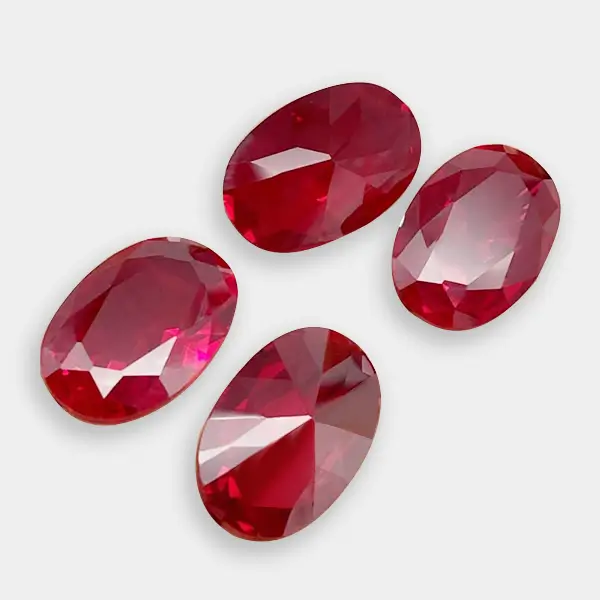
The final sorting stage focuses on optical performance and mechanical symmetry. Table percentages, crown angles, pavilion depths, and girdle thickness must be measured against strict production specifications. Asymmetric facets or off-center culets compromise light return, resulting in dead spots or windowing where light leaks through the pavilion rather than reflecting back to the observer.
Technicians visually inspect facet junctions under polarized light to identify stress strains or polishing chatter marks. Only gems exhibiting brilliant polish, sharp facet junctions, and optimal light dispersion pass to final packaging. Implementing this multi-tiered sorting procedure protects manufacturing yields, optimizes setting turnaround times, and maintains brand reputation across global distribution channels.
How To Source Best Quality Lab Created Ruby For Your Jewelry Brand Line
Sourcing precision-cut gemstones requires navigating complex wholesale landscapes. For boutique jewelry stores, jewelry brand suppliers, and international jewelry importers and exporters, securing premium raw materials defines market reputation. When designing collections around corundum, understanding wholesale specifications ensures high margins, consistent inventories, and enduring customer loyalty. Luxury houses increasingly rely on controlled-environment synthesis to guarantee supply chain stability.
Evaluating Material Authenticity and Composition
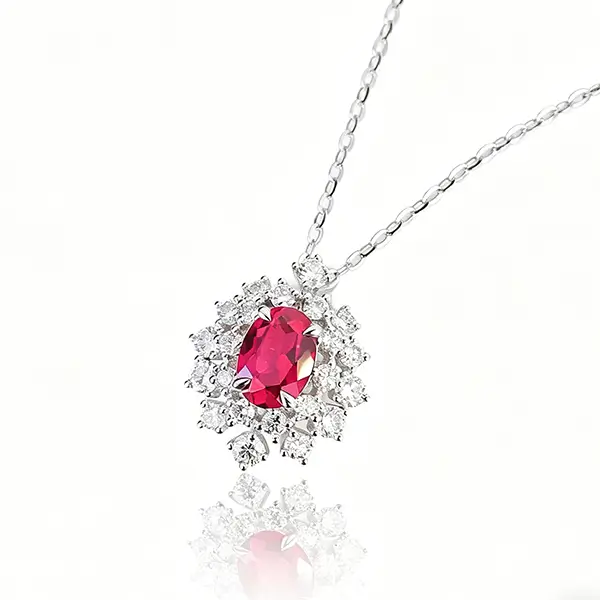
Industry professionals frequently question are lab created rubies real. Scientifically, these stones share the identical chemical formula, crystal structure, optical refraction, and physical properties as mined gems. Composed of aluminum oxide laced with chromium, they register a 9 on the Mohs scale, guaranteeing identical scratch resistance and structural durability.
Wholesale buyers must evaluate parcel lots for optical clarity, microscopic inclusion patterns, and pavilion depth. Advanced flame-fusion, Czochralski pulling, or flux-grown manufacturing methods dictate how light disperses through precision crown facets. Strict verification protocols prevent accidental substitution with inferior synthetic spinel, colored glass, or composite doublets. High-end procurement teams always demand comprehensive certificate documentation from primary manufacturers to verify thermal treatment histories and precise trace-element concentrations.
Analyzing Market Worth and Investment Appeal
A common inquiry among commercial designers centers on are lab created rubies valuable. While natural stones derive market worth from geological scarcity, synthetic alternatives derive value from flawless craftsmanship, scalability, and ethical transparency. Modern luxury consumers increasingly prioritize sustainable supply chains and conflict-free origins without sacrificing optical brilliance or fire.
This economic predictability allows design houses to stabilize retail pricing across seasonal collections, avoiding the extreme price volatility associated with high-grade Burmese mines. Sourcing direct from primary manufacturers eliminates unnecessary intermediary costs, significantly maximizing profitability for wholesale distributors and independent retailers alike. Long-term asset value in this sector relies heavily on consistent calibration, precise millimeter sizing, and superior polish grades.
Practical Performance Metrics and Selection Standards
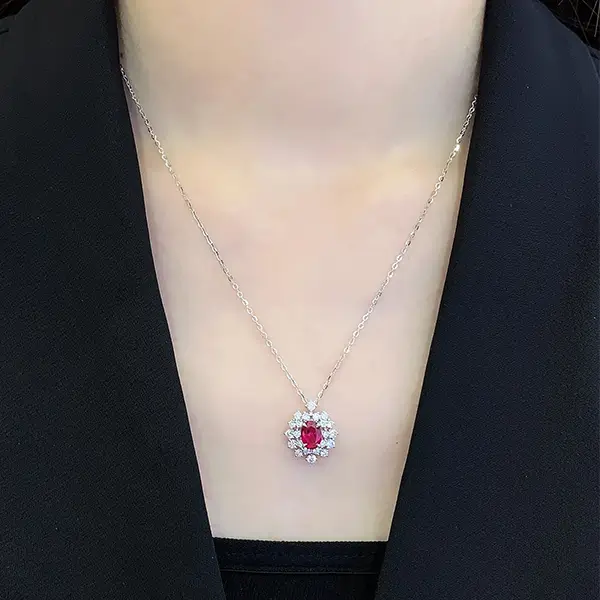
Retailers often ask are lab created rubies good for high-end daily wear collections. Laboratory-grown corundum outperforms many natural counterparts structurally because it lacks deep geological stress fractures and heavy internal feather inclusions. Procurement specialists should inspect rough material and faceted parcels for uniform color saturation and clean windowing.
The best quality lab created ruby stock exhibits vivid pigeon-blood red hues without undesirable brownish, purplish, or orange undertones. Ensuring rigorous optical checks during wholesale intake guarantees that every finished mounting meets high-end luxury standards. By partnering with certified crystal growers who utilize advanced spectroscopic analysis, brands can secure calibrated inventory that elevates their entire jewelry lineup.
Best-Selling Bulk Lab Ruby Jewelry Styles
Lab ruby jewelry has emerged as a top bulk purchasing choice for jewelry retailers, boutique owners, and fashion distributors worldwide. Combining premium visual appeal, stable physical properties, ethical production, and competitive pricing, bulk lab ruby jewelry perfectly caters to modern consumer preferences and wholesale business demands. This article explores core knowledge of lab-created rubies, mainstream best-selling bulk styles, market advantages, and wholesale application scenarios to help businesses grasp the trending jewelry category.
What Is a Lab Created Ruby
Many wholesale buyers and end consumers have questions about synthetic gemstones, especially regarding the authenticity and quality of ruby alternatives. what is a lab created ruby refers to a genuine ruby cultivated in a controlled laboratory environment through advanced gemstone growth technology, rather than mined from underground crust deposits. Chemically, physically, and optically, lab created rubies are completely identical to natural rubies. They are composed of aluminum oxide with trace chromium elements that produce the classic vivid red hue, boasting a Mohs hardness of 9, second only to diamonds, ensuring excellent scratch resistance and wear durability for long-term jewelry use.
Unlike glass or cubic zirconia simulants, lab created rubies feature authentic gemstone luster, clear light refraction, and stable color fastness that never fades over time. Two mainstream production methods, flame fusion and flux growth, are widely adopted in modern gem factories. The flame fusion method efficiently produces high-purity ruby crystals in a few hours, while the flux growth method replicates natural mineral growth conditions to form rubies with more natural texture. The standardized laboratory production process eliminates the impurities, color unevenness, and rare defects common in natural rubies, delivering consistent, high-quality gemstones for mass jewelry production.
Why Bulk Lab Ruby Jewelry Dominates the Wholesale Market
Bulk lab ruby jewelry has become a staple in global jewelry bulk sales thanks to its unique comprehensive advantages that solve multiple pain points for both wholesalers and retailers. First, it offers extreme cost-effectiveness. Natural high-quality rubies are scarce and expensive due to limited mining resources and complex mining processes, while lab created rubies skip high mining, transportation, and screening costs, reducing the overall pricing of finished jewelry by 60% to 80% without sacrificing beauty and quality. This allows retailers to set flexible retail prices and capture mid-range and high-end consumer markets simultaneously.
Second, lab ruby jewelry features outstanding sustainability and ethical attributes. Traditional ruby mining often leads to deforestation, soil erosion, and water pollution, and is occasionally associated with unethical labor issues. In contrast, lab-grown ruby production is environmentally friendly, with a carbon footprint only one-twentieth of natural ruby mining, complying with the global sustainable consumption trend. More young consumers prioritize ethical and eco-friendly accessories, making bulk lab ruby jewelry easier to gain market recognition and customer loyalty.
Third, mass production ensures stable quality and sufficient supply. Natural ruby output is unstable with uneven stone quality, which easily causes inventory shortages and inconsistent finished product quality for retailers. Lab ruby production is fully standardized and industrialized, enabling large-scale batch production of rubies with consistent color, clarity, and cut. This guarantees uniform quality of bulk jewelry orders, shortens delivery cycles, and supports long-term stable cooperation for wholesale businesses.
Top Selling Bulk Lab Ruby Jewelry Styles
1. Lab Created Ruby and Diamond Ring Series
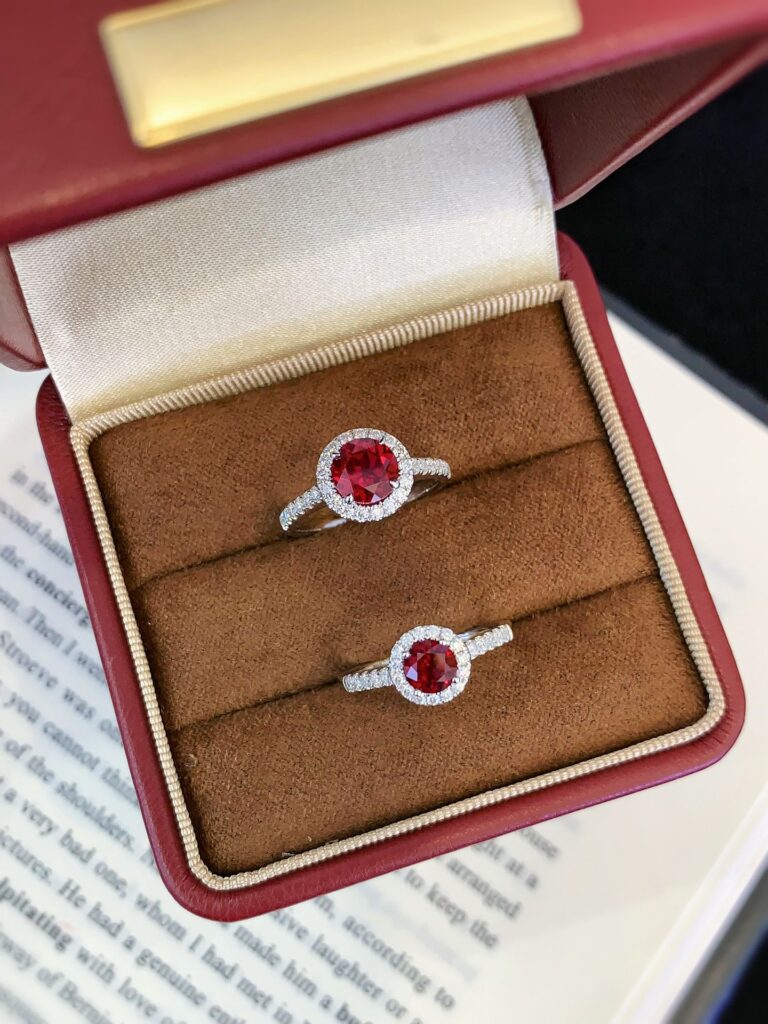
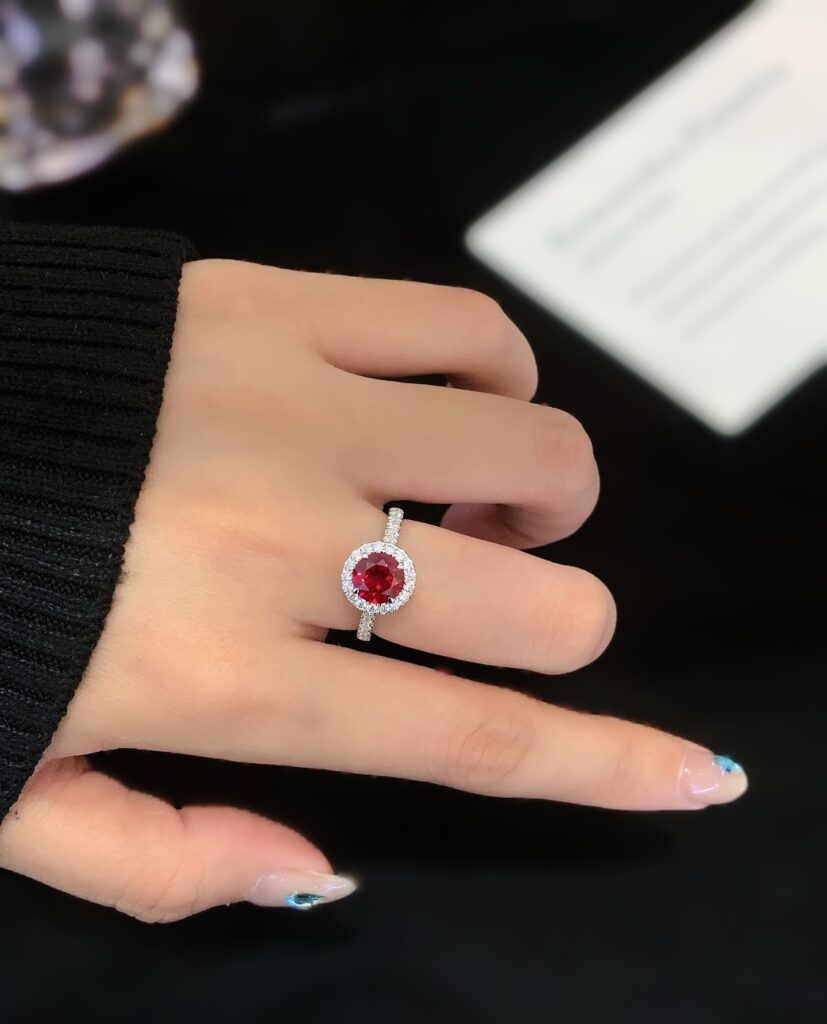
As the most popular core category, lab created ruby and diamond ring styles rank first in bulk sales volume, suitable for daily wear, holiday gifts, and ceremonial scenarios such as anniversaries and proposal occasions. The classic matching design combines the warm, noble red of lab rubies with the bright, dazzling luster of diamonds, forming a striking color contrast and layered visual effect. Bulk wholesale styles cover diverse designs to meet different market demands, including minimalist single-stone solitaire rings, halo surround diamond rings, split-shank layered rings, and vintage carved band rings.
In terms of material matching, mainstream bulk styles adopt sterling silver, stainless steel, and alloy with electroplated gold or rose gold, which are hypoallergenic, rust-proof, and suitable for long-term daily wear. The lab rubies used in bulk rings are mostly cut into round, cushion, oval, and princess shapes, with high clarity and vivid pigeon blood red color, the most sought-after ruby hue in the market. For high-end bulk orders, customized carat sizes and inlay craftsmanship are available, while regular bulk styles maintain standardized specifications to ensure fast delivery and cost control. These rings are favored by offline jewelry stores, online cross-border e-commerce sellers, and gift shop owners for their high appearance and wide audience coverage.
2. Minimalist Lab Ruby Daily Wear Jewelry Sets
Matching jewelry sets are a hot bulk product in recent years, including necklaces, earrings, bracelets, and rings with unified design elements. Lab ruby set styles focus on minimalist and versatile design, abandoning overly complicated carvings to adapt to daily casual, workplace, and commuting wear scenarios. The small-sized round or teardrop-shaped lab rubies are inlaid delicately, paired with fine diamond embellishments, creating a low-key luxurious texture. Bulk sets are highly cost-effective, driving higher customer unit prices for retailers and becoming a best-selling combo product for promotional activities.
3. Vintage Luxury Lab Ruby Statement Jewelry
Vintage-style lab ruby jewelry targets fashion-forward consumers and formal occasion wear markets. This series adopts retro hollow carving, milgrain edge grinding, and layered inlay craftsmanship, with large-sized high-color lab rubies as the core design. The deep red ruby complements retro gold and silver metal tones, presenting a noble and elegant temperament. Including exaggerated drop earrings, wide-face cocktail rings, and oversized pendant necklaces, these statement pieces are widely used in party, banquet, and shooting styling scenarios, with high profit margins and strong market competitiveness in bulk wholesale.
Market Trends and Wholesale Business Tips for Lab Ruby Jewelry
With the continuous upgrading of lab gemstone technology, the quality of lab created rubies is constantly improving, and the product styles are becoming more diversified. Personalized customization, minimalist light luxury, and vintage retro are the three major development trends of bulk lab ruby jewelry. For wholesale buyers, choosing standardized bulk lab ruby jewelry with stable quality can effectively reduce inventory risks. Meanwhile, matching classic ring styles with versatile jewelry sets can enrich product lines and cover consumer groups of all ages.
In addition, the ethical and eco-friendly attributes of lab ruby jewelry are important selling points for market promotion. Retailers can highlight the advantages of no mining damage, low carbon emission, and affordable high-quality gemstones in product marketing to attract environmentally conscious young consumers. Compared with natural ruby jewelry with high pricing and unstable quality, bulk lab ruby jewelry has higher market flexibility and broader development space in the current consumer market.
Lab ruby jewelry has broken the market limitations of traditional high-priced natural ruby jewelry, relying on its authentic gemstone quality, ethical production, cost advantages, and diverse stylish designs. The classic lab created ruby and diamond ring series and various matching sets have become timeless bestsellers in the bulk jewelry industry. As consumer demand for affordable, sustainable, and high-fashion gem jewelry continues to grow, bulk lab ruby jewelry will maintain a strong market momentum, becoming an indispensable core product for global jewelry wholesale and retail businesses.
Commercial Value & Procurement Advantages of Lab Grown Ruby Jewelry
The global fine jewelry industry is undergoing a significant transformation driven by sustainability, cost efficiency, and stable supply chain demands, making lab grown ruby jewelry one of the fastest-growing product categories for commercial jewelry businesses. Unlike traditional mined ruby jewelry that suffers from scarce resources, inconsistent quality, high mining costs, and ethical controversies, lab-grown ruby accessories replicate the exact chemical, physical, and visual properties of natural rubies through advanced laboratory cultivation technology. For professional jewelry wholesalers, offline jewelry retailers, and high-end boutique jewelry stores, this emerging jewelry series is no longer a niche alternative but a core profit-bearing product line. It perfectly balances consumer pursuit of luxury gem aesthetics and merchants’ demand for low-cost, high-profit, and stable inventory operation, forming unique commercial competitiveness in the mid-to-high-end fine jewelry market.
Diversified Product Portfolio Enriching Business Inventory
A core advantage of lab grown ruby jewelry in commercial operation lies in its complete product matrix covering mainstream wearable styles, which helps B-end merchants fully cover market demands and avoid single product structure risks. As the most popular core single product, the lab grown ruby ring boasts rich design iterations, including classic solitaire styles for engagement and gifting, halo inlaid luxury styles for formal occasions, and minimalist thin-band daily casual styles. The diverse style positioning enables wholesalers to achieve full-price-range coverage in bulk supply, while allowing retailers and boutique stores to match different customer groups, from young daily wear consumers to high-end custom gift buyers, effectively improving store passenger flow and transaction rate.
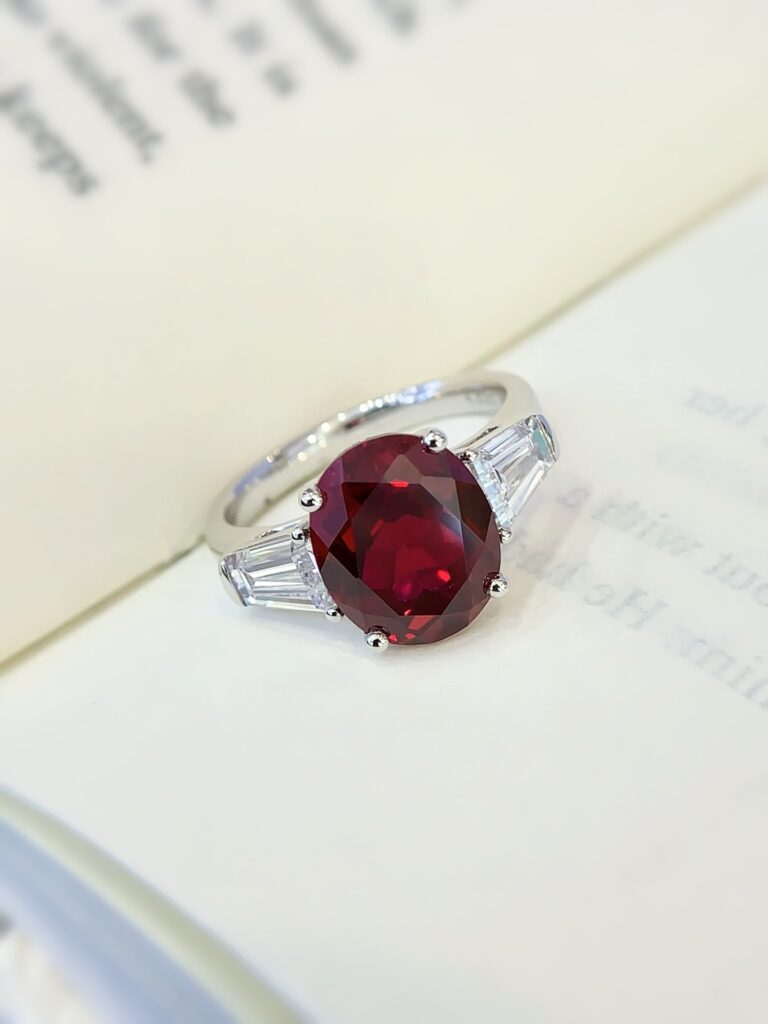
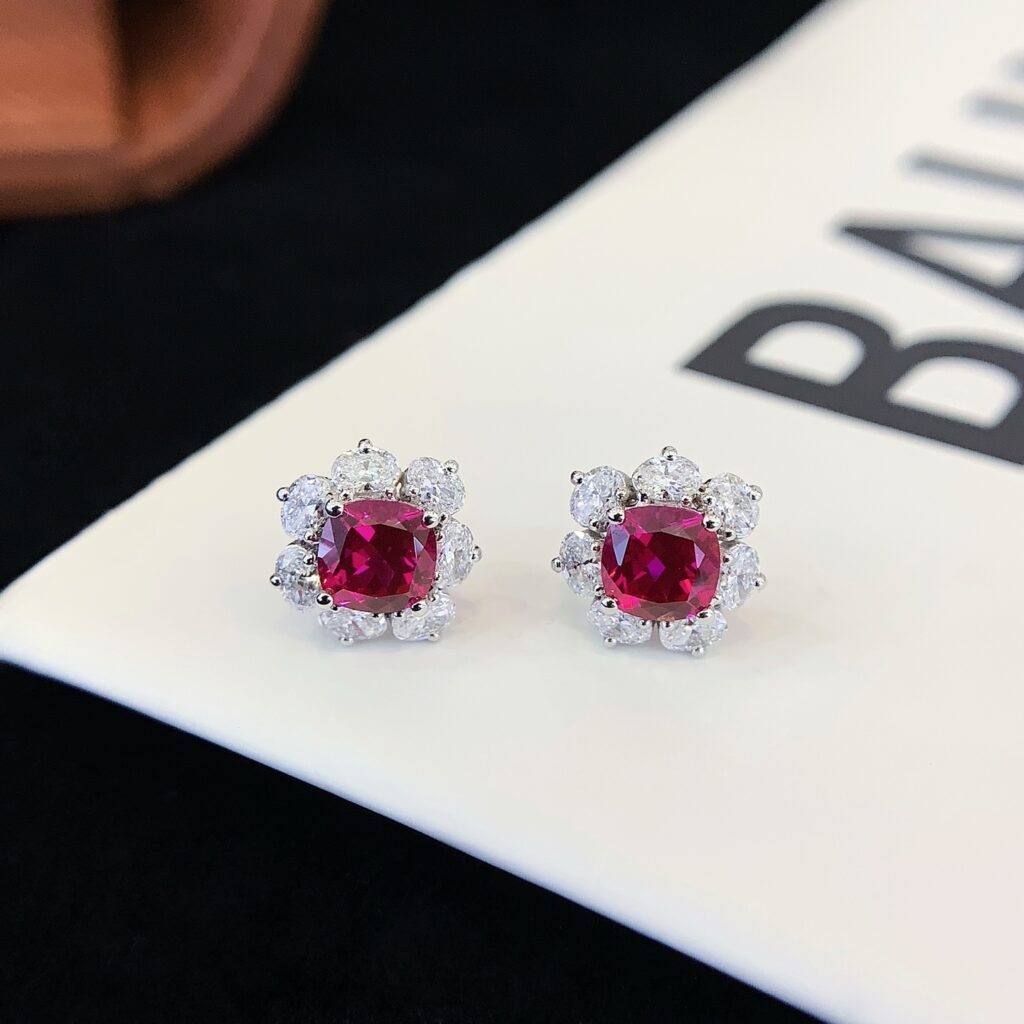
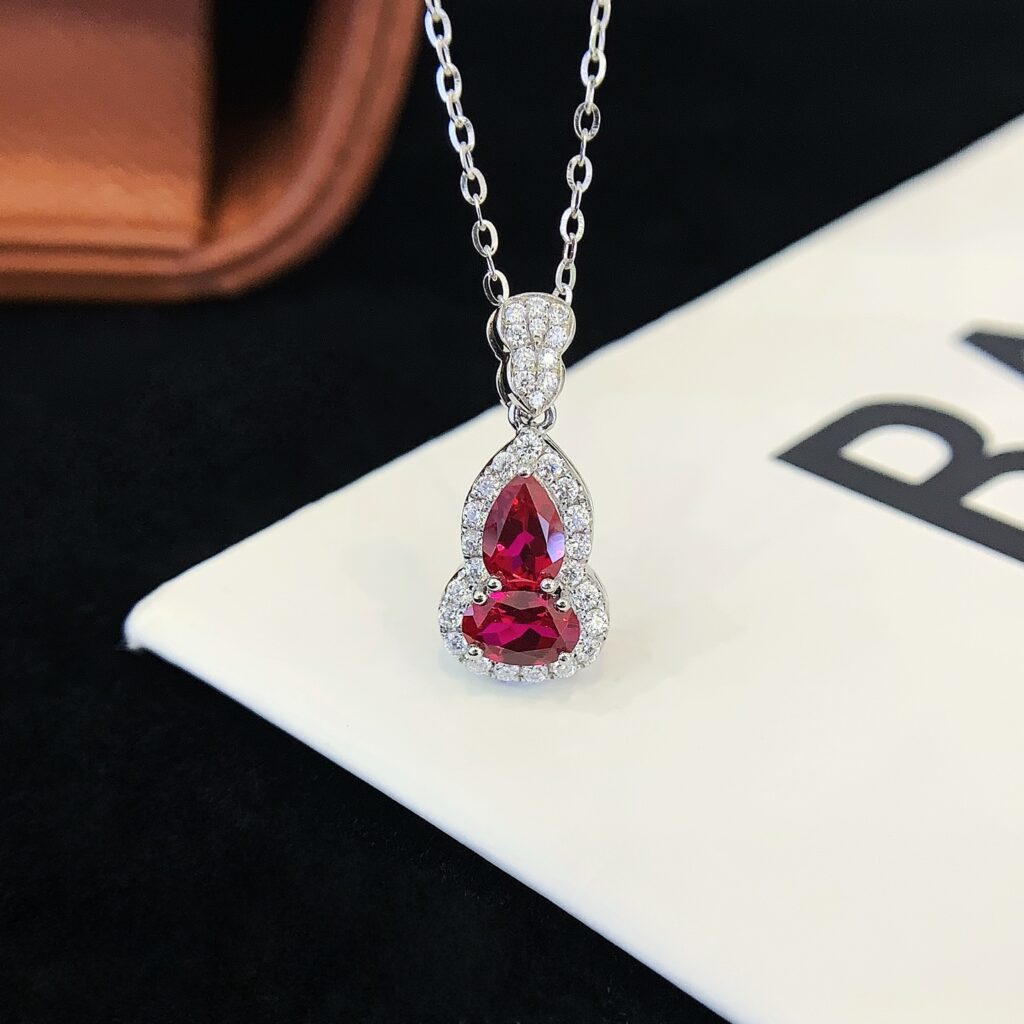
Complementing ring products, lab created ruby earrings serve as high-turnover staple items for all jewelry business scenarios. Including studs, drop styles, hoops, and cluster inlaid designs, these earrings feature versatile matching performance and ultra-high customer acceptance, suitable for mass daily sales and holiday promotional activities. Meanwhile, the lab created ruby necklace acts as a high-value profit booster, with delicate single-pendant designs for daily retail and layered vintage inlaid styles for high-end boutique customization. The complete set of ring, earring, and necklace products supports merchants to launch bundled gift sets, greatly increasing customer unit price and order profit space.
In-Depth Analysis: Are Lab Grown Rubies Valuable for Commercial Operation
Most jewelry business practitioners focus on the key commercial question: are lab grown rubies valuable. Different from individual consumers who only focus on wearing effect, the commercial value of lab-grown rubies is reflected in long-term operational stability, market scalability, and profit sustainability. In terms of product value, lab-grown rubies feature Mohs 9 super hardness, stable vivid red tone, and high clarity, with wear resistance and color fastness far exceeding many natural semi-precious stones, ensuring reliable product quality and greatly reducing merchants’ after-sales return and exchange rate.
In terms of market value, the global consumer market is increasingly favoring sustainable and eco-friendly jewelry. Lab-grown rubies avoid environmental damage and labor risks caused by natural gem mining, conforming to mainstream sustainable consumption trends, and have continuous market growth potential. In terms of profit value, lab-grown rubies have extremely low raw material and production costs compared with natural rubies of the same grade. Merchants can obtain high-quality finished products at a low procurement price and set flexible retail pricing, realizing high profit margins while retaining price competitiveness in the market.
Core Procurement Advantages of Wholesale Lab Ruby Earrings and Full Series Products
For B-end jewelry merchants with inventory turnover and profit maximization as the core goal, wholesale lab ruby earrings and supporting lab-grown ruby jewelry series have irreplaceable procurement advantages compared with natural ruby products. First is the advantage of stable batch quality. All lab-grown rubies are cultivated in standardized laboratory environments, with unified color, clarity, and cutting specifications between batches. Jewelry wholesalers do not need to worry about uneven stone quality, while retailers and boutique stores can maintain consistent product display effects and brand positioning.
Second is the flexible inventory advantage. Natural ruby jewelry is limited by scarce raw materials, making large-batch stocking and flexible style adjustment impossible. In contrast, lab-grown ruby jewelry supports customized mass production and small-batch mixed wholesale. Small and medium-sized retailers and boutique jewelry stores can stock various styles in small batches according to seasonal trends and consumer preferences, effectively reducing inventory pressure and capital occupation. Large-scale wholesalers can carry out large-batch customized production to meet the differentiated supply needs of downstream merchants in different regions.
Third is the cost and profit advantage. The mature industrialized production of lab-grown rubies greatly compresses raw material costs. Wholesale prices are far lower than natural ruby jewelry of the same appearance and grade, allowing merchants of all links to obtain sufficient profit margins. Whether it is bulk distribution by wholesalers, daily retail by stores, or high-end customized sales by boutiques, the product cost can well match the business positioning, realizing sustainable profit growth.
Long-Term Business Benefits for Jewelry Wholesalers, Retailers and Boutiques
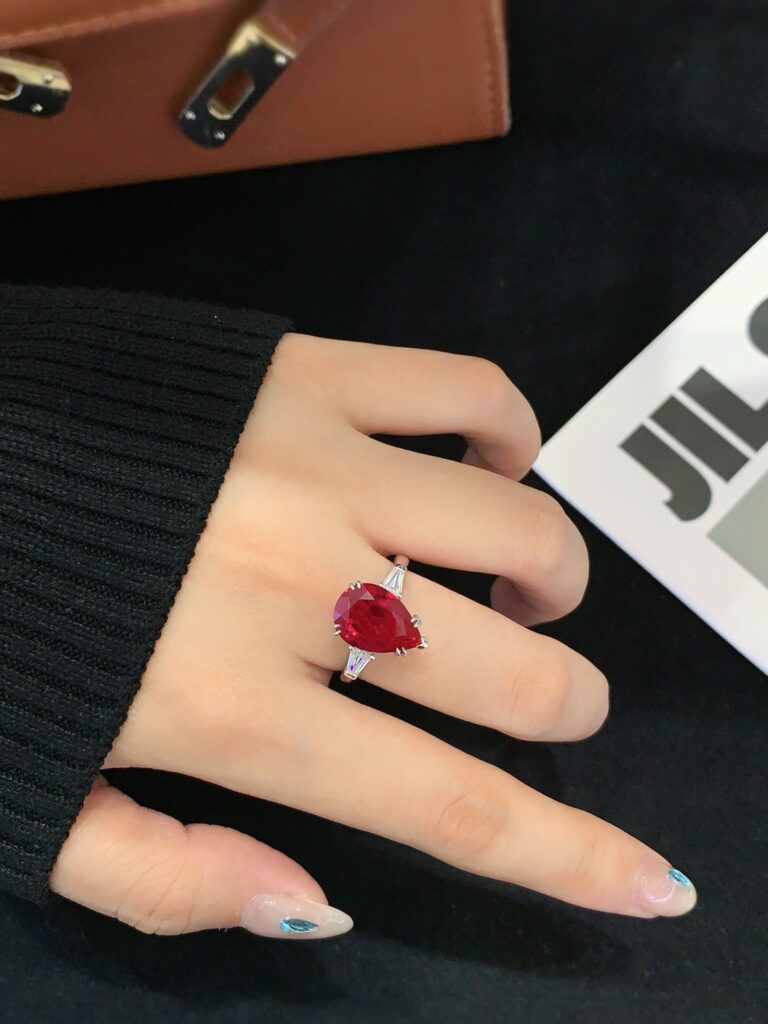
For jewelry wholesalers, lab grown ruby jewelry series is an excellent bulk supply product with stable supply, low defect rate, and rich styles. It can enrich the wholesale product line, meet the diversified procurement needs of downstream customers, and enhance core competitiveness in the homogeneous wholesale market. For ordinary jewelry retailers, the high cost performance and high customer acceptance of lab-grown ruby rings, earrings, and necklaces can drive stable daily sales and holiday explosive sales, improving store comprehensive turnover.
For high-end boutique jewelry stores, the customizable high-grade lab-grown ruby jewelry can create differentiated high-end product positioning. Merchants can launch exclusive customized styles to attract high-spending customer groups, get rid of low-price competition, and build unique store brand characteristics. In general, lab-grown ruby jewelry not only has immediate procurement cost advantages but also long-term market development and brand value, which is a must-layout high-quality product category for all types of commercial jewelry businesses.
Quality, Pricing and Jewelry Applications of Lab Grown Ruby
Many jewelry enthusiasts and buyers struggle to distinguish and choose between lab grown ruby vs natural rubies, as the two share identical chemical composition, physical hardness and optical properties while possessing fundamental differences in formation, rarity and value. Natural rubies are forged by millions of years of geological movements deep in the earth’s crust, forming under extreme high temperature and pressure. They naturally contain unique mineral inclusions, tiny fissures and color variations, making every natural ruby a one-of-a-kind gemstone with irreplicable natural charm. Most high-quality natural rubies also require heat treatment to optimize color and clarity, and large, eye-clean vivid red natural rubies are extremely scarce in the global gem market.
In contrast, lab grown rubies are cultivated in controlled laboratory environments using advanced flux growth and hydrothermal methods, simulating the natural formation process of rubies in a short period of weeks or months. These cultivated rubies boast highly uniform color, flawless clarity and stable texture, without the random defects common in natural stones. In terms of durability, both types score 9 on the Mohs hardness scale, offering excellent scratch resistance suitable for daily jewelry wear. The most prominent gap lies in rarity and production sustainability: natural ruby mining is limited by mineral reserves and mining conditions, while lab grown rubies support stable and large-scale production, avoiding the environmental damage and ethical issues associated with traditional gem mining.
Transparent Breakdown of Lab Grown Ruby Price Per Carat
Price is the most intuitive advantage of lab grown rubies, and understanding the specific lab grown ruby price per carat helps buyers make cost-effective purchasing decisions. Unlike natural rubies whose prices surge exponentially with carat weight, color grade and clarity, lab grown ruby pricing follows a linear and stable growth pattern. Entry-level 1-carat lab grown rubies with standard vivid red color and eye-clean clarity are priced between $150 to $200 per carat, while high-grade vivid pigeon blood red stones with perfect clarity range from $300 to $800 per carat. Even premium 3 to 5-carat high-quality lab grown rubies rarely exceed $1,000 per carat.
In sharp comparison, a 1-carat high-quality natural ruby starts at $2,000, and collector-grade large natural rubies can reach tens of thousands of dollars per carat. Overall, lab grown rubies only cost 10% to 30% of natural rubies with identical visual quality. The stable pricing system makes them ideal for daily wear jewelry, customized accessories and commercial jewelry batches, eliminating the huge premium caused by natural gem rarity and market speculation.
Classic Styling of Lab Grown Ruby Rings for Women
As a classic symbol of passion, elegance and nobility, rubies are highly favored in women’s jewelry, and lab grown ruby rings for women have become a mainstream choice for modern female consumers. Benefiting from the controllable quality and diverse specifications of lab grown rubies, these rings cover rich styles suitable for different scenarios and aesthetics. Minimalist solitaire designs with single round or oval lab grown rubies are perfect for daily casual wear, highlighting delicate and low-key temperament without losing a sense of refinement.
For formal occasions and romantic scenarios, halo-set and three-stone lab grown ruby rings are extremely popular. Surrounded by sparkling simulated diamonds or white sapphires, the bright red tone of rubies is fully accentuated, creating a luxurious and romantic visual effect. Vintage-style lab grown ruby rings with carved gold details and split shank designs cater to the preference for retro elegance, while slim band stackable styles meet the trendy matching needs of young women. All styles retain the brilliant luster and pure color of high-end rubies, allowing women to own high-looking, high-durability ruby rings at an affordable price.
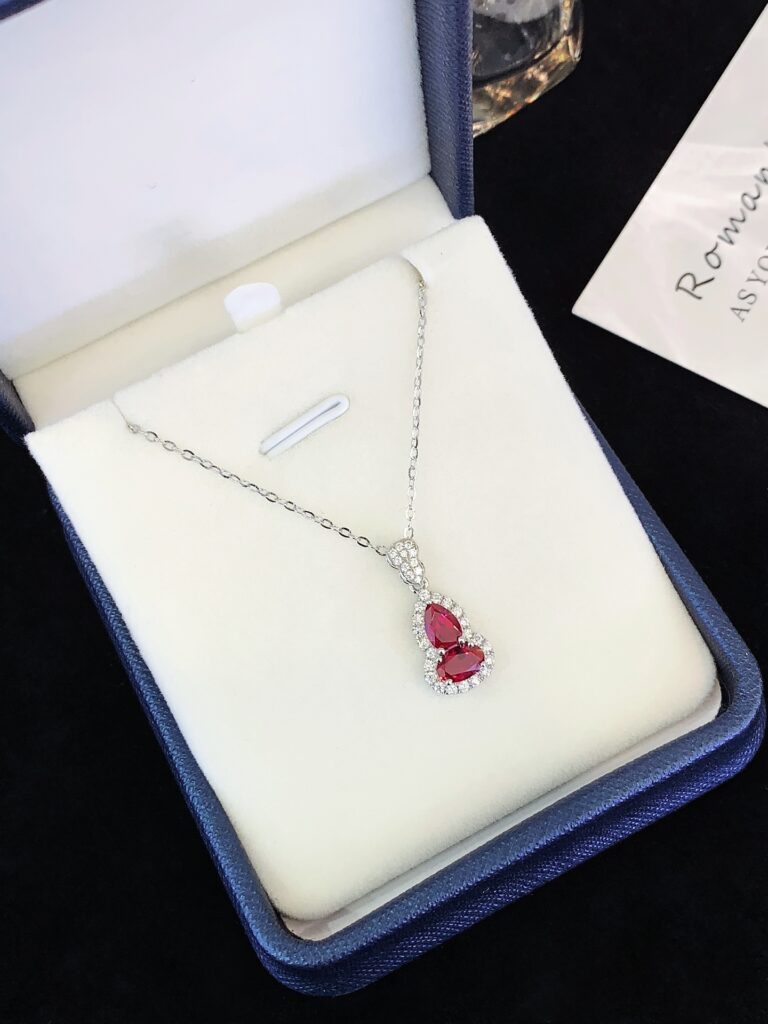
High-End Daily Wear of Lab Grown Ruby Necklace Gold
Gold jewelry perfectly complements the warm red tone of rubies, and lab grown ruby necklace gold series has become a versatile staple in modern women’s jewelry boxes. Matching lab grown rubies with 14K or 18K solid gold frames not only enhances the texture and durability of the necklace but also creates a classic color contrast that never goes out of style. The gold metal’s warm luster neutralizes the bright red of rubies, presenting an elegant and gentle temperament suitable for commuting, dating, banquets and daily leisure wear.
The product line of gold necklaces with lab grown rubies is diverse, including delicate pendant necklaces with small carat rubies for daily subtle embellishment, clavicle chain styles with multi-stone inlay for layered matching, and large-size main stone pendant necklaces for formal occasion styling. Lab grown rubies used in gold neckies feature uniform color and flawless surface, ensuring consistent and exquisite overall jewelry texture. Meanwhile, the cost advantage of lab grown rubies allows gold ruby necklaces to maintain high-end appearance and quality at a much lower price than natural ruby gold necklaces, making high-end gemstone gold jewelry accessible to more consumers.
Commercial Value and Application of Bulk Lab Grown Ruby
For jewelry brands, processing factories and wholesale merchants,bulk lab grown ruby provides stable, high-quality and cost-effective raw material support for large-scale jewelry production and commercial sales. Different from the limited supply and unstable quality of bulk natural rubies, bulk lab grown rubies can be customized in batches according to specific parameters, including unified carat weight, color grade, clarity and cutting style, realizing standardized jewelry production.
Bulk supply covers full specifications from small 0.5-carat melee stones for auxiliary inlay to large 5-carat above main stones for high-end customized jewelry. All bulk lab grown rubies are produced under strict laboratory quality control, with consistent color saturation, no obvious internal inclusions, and stable physical properties, which greatly reduces the defective rate in jewelry processing. In addition, batch procurement significantly reduces unit costs, helping jewelry businesses optimize product pricing, enrich product lines, and launch cost-effective ruby jewelry series to capture more market share. The eco-friendly and ethical production of lab grown rubies also conforms to the current global consumer pursuit of sustainable jewelry, bringing long-term brand value and market competitiveness to merchants.
Conclusion
Lab grown rubies have broken the high threshold of traditional natural ruby jewelry with their superior quality stability, transparent pricing, diverse styling and scalable production capacity. Whether for individual consumers pursuing cost-effective daily wear, including classic rings and gold necklaces, or for commercial buyers needing bulk gem raw materials, lab grown rubies show irreplaceable advantages over natural rubies. As jewelry craftsmanship continues to upgrade and consumer concepts become more rational, lab grown ruby jewelry will continue to occupy an important position in the global gem jewelry market, balancing beauty, practicality and affordability perfectly.
Premium Jewelry Supply for Wedding and Valentine Markets
China has long established itself as the global core hub for fashion and ceremonial jewelry manufacturing and wholesale, boasting complete industrial chains covering gemstone processing, jewelry design, precision inlaying, finished product assembly and bulk supply services. With mature production technology, flexible customization capabilities and cost-effective pricing systems, Chinese jewelry manufacturers cater to diverse market demands ranging from high-end wedding ceremonies to seasonal romantic holiday consumption. In the global cross-border jewelry trade, merchants from Europe, America, Southeast Asia and the Middle East consistently prioritize Chinese suppliers for stable quality, short lead times and diversified product lines. Among the most popular bulk supply categories in recent years, wholesale bridal jewelry sets stand out as a star product, dominating the global wedding jewelry market with exquisite craftsmanship and versatile design styles that fit mainstream wedding aesthetics worldwide.
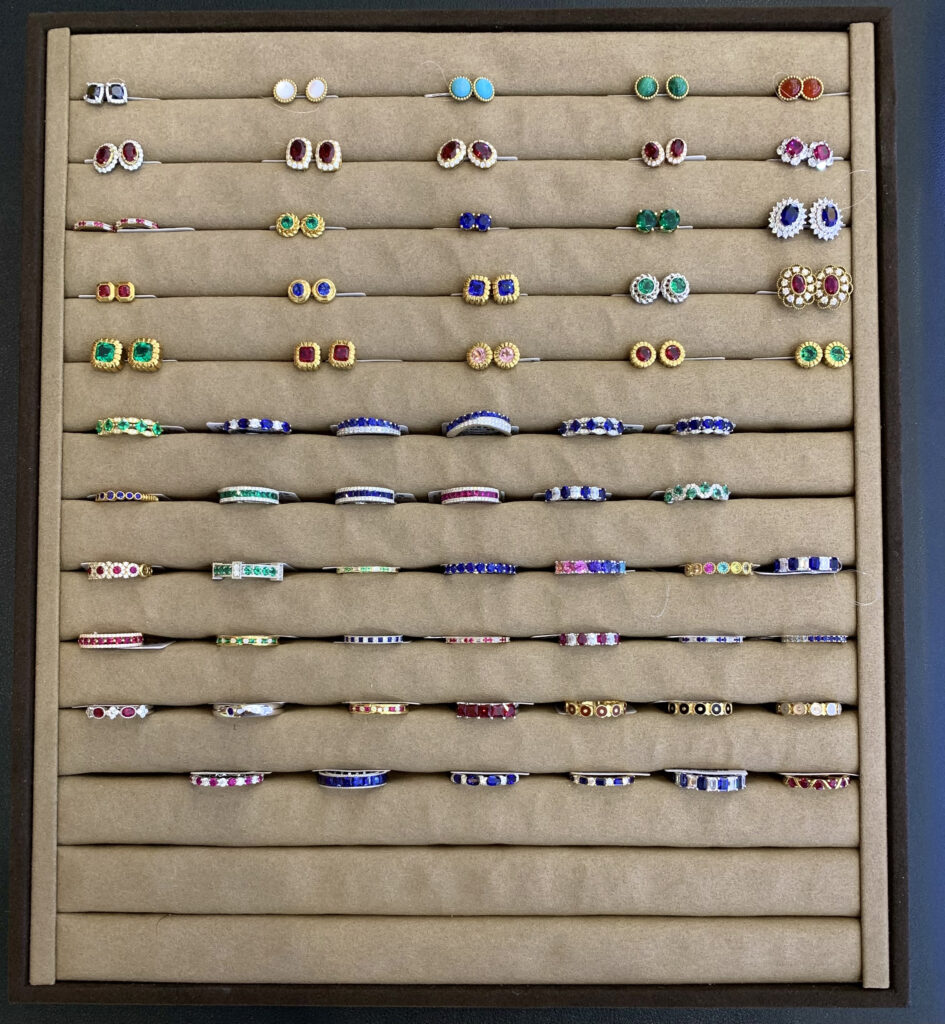
The prosperity of the bridal jewelry wholesale sector is backed by China’s superior industrial cluster advantages. Major jewelry manufacturing bases across the country integrate raw material screening, intelligent production, quality inspection and logistics distribution, enabling large-scale standardized production while supporting personalized design adjustments. Whether it is minimalist modern wedding jewelry, luxurious vintage inlaid sets, or delicate lightweight bridal accessories suitable for outdoor weddings and travel photography, Chinese factories can complete mass production efficiently. Compared with foreign handmade jewelry products, Chinese wholesale bridal jewelry sets balance quality and price perfectly, making them the preferred procurement choice for offline jewelry stores, online cross-border e-commerce sellers and wedding planning institutions around the world.
Diversified Market Adaptation of China Valentine Jewelry Set Supply
Romantic holiday jewelry has always been a high-demand segment in the global fashion consumer market, and seasonal festive procurement puts forward higher requirements for product update speed, style diversity and batch supply stability. As a leading global jewelry supplier, China precisely captures the consumption trends of Valentine’s Day, anniversaries and other romantic festivals, launching targeted fashionable jewelry combinations for different consumer groups and market positioning. supply china valentine jewelry set has become a mainstream cross-border procurement business, covering full-grade products from affordable entry-level fashion sets to high-end luxury customized sets.
Chinese Valentine jewelry sets cover complete product combinations including necklaces, earrings, rings, bracelets and pendant sets, with rich design themes such as heart-shaped inlay, starry sky elements, minimalist geometry and romantic lettering. Factories support flexible MOQ settings, which not only meet the bulk procurement needs of large chain jewelry brands but also adapt to the small-batch trial order demands of small and medium-sized cross-border merchants and independent boutique sellers. In terms of material selection, the products adopt hypoallergenic alloy, sterling silver, gold-plated and rose gold-plated processes, matching artificial gemstones, zircon and high-quality colored gemstones to ensure beautiful appearance and comfortable wearing experience. Every year before Valentine’s Day, Chinese suppliers launch new seasonal styles in advance, helping global distributors seize holiday consumption dividends and effectively solve the problems of slow style update and insufficient supply capacity in overseas local markets.
Core Material Advantage of Factory Direct Lab Grown Emeralds
High-quality gemstone materials are the core foundation of high-grade jewelry sets, and the innovation of gemstone manufacturing technology has greatly improved the cost performance and market competitiveness of Chinese jewelry products. In the field of colored gemstone application, lab grown emeralds have gradually replaced part of natural emerald materials and become the mainstream in mid-to-high-end customized jewelry due to their pure color, stable quality and affordable price. lab grown emeralds from factory adopt advanced hydrothermal growth technology, which simulates the natural formation environment of emeralds in a precise laboratory environment, producing gemstones with the same physical properties, chemical composition and optical effects as natural emeralds.
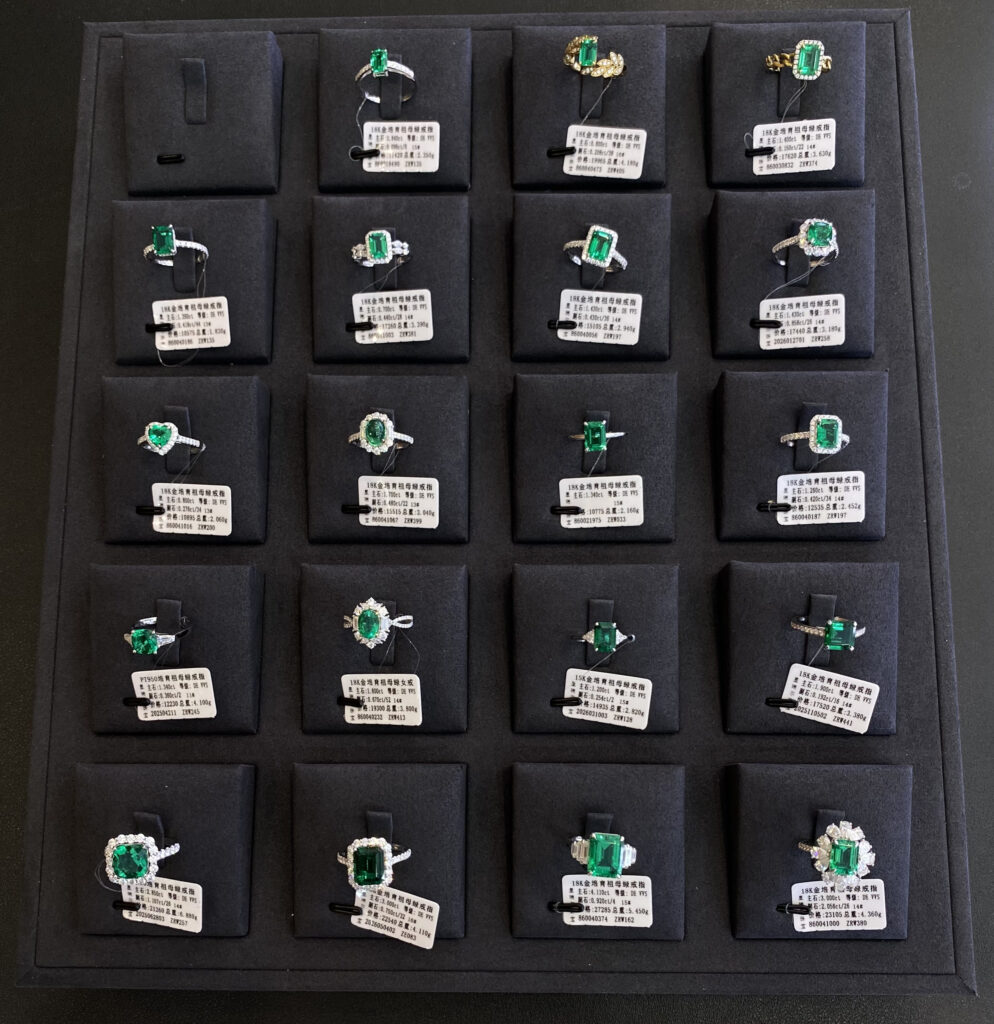
Factory direct supply of lab grown emeralds eliminates intermediate circulation links, realizing direct docking between gemstone raw materials and jewelry processing factories. These factory-produced emeralds support diversified cutting styles including round, oval, square, heart-shaped and cushion cuts, with complete color grades from vivid vivid green to medium green, and stable clarity without obvious cracks and impurities. Compared with natural emeralds with scarce reserves and sky-high prices, factory lab grown emeralds have controllable output and stable quality, which can fully meet the large-scale matching demand of high-end bridal jewelry sets and luxury Valentine jewelry sets. At the same time, the standardized production process ensures consistent gemstone specifications in bulk orders, avoiding the color difference and quality instability problems of natural gemstone batch matching, greatly improving the overall grade and uniformity of finished jewelry sets.
Integrated Supply Chain Service for Global Jewelry Buyers
Chinese jewelry suppliers do not only provide single product sales, but also build a one-stop integrated supply chain service system integrating raw material supply, design development, batch production, quality inspection and cross-border logistics. Relying on self-produced lab grown emeralds and other high-quality gemstone raw materials, factories independently complete the whole process from gemstone cutting and polishing to jewelry inlaying and finished product packaging, effectively controlling product quality and production cycle. For global buyers, this integrated model greatly reduces procurement costs and communication costs, and supports personalized services such as exclusive logo customization, style modification and packaging customization.
In terms of quality control, every batch of wholesale bridal jewelry sets and Valentine jewelry sets will pass strict finished product inspection, including surface polishing detection, inlay firmness test, hypoallergenic material test and gemstone grade verification. All lab grown emeralds from factory are equipped with professional quality inspection certificates to ensure product compliance with global market sales standards. In terms of logistics, suppliers cooperate with mature cross-border logistics companies to support global door-to-door delivery, with fast delivery speed and stable logistics channels, which can meet the urgent order demands of holiday peak seasons.
Future Development Trends of China’s Global Jewelry Wholesale Industry
With the continuous upgrading of global consumer aesthetics and the rising awareness of environmental protection, lab grown gemstone jewelry has become an irreversible development trend in the fashion jewelry industry. More and more consumers tend to choose cost-effective, environmentally friendly and high-quality lab grown emerald jewelry instead of expensive natural gemstone products. Driven by market demand, Chinese jewelry factories will continue to optimize gemstone growth technology and jewelry design techniques, launch more personalized and trendy bridal and Valentine jewelry styles, and further expand the competitive advantages of Chinese manufacturing in the global high-end jewelry wholesale market.
In the future, the integration of intelligent production and customized services will become the core competitiveness of China’s jewelry supply industry. By combining high-quality factory direct supply gemstone resources with trendy design concepts, Chinese suppliers will continue to provide global buyers with higher-quality, more cost-effective and more diversified jewelry wholesale solutions, further consolidating China’s leading position in the global wedding and romantic holiday jewelry supply field.
Sourcing Strategies for Bulk Gemstone and Wedding Jewelry
The global gemstone jewelry industry has maintained steady growth in recent years, with market size projected to surpass 101 billion USD by 2032 at a compound annual growth rate of 6.3%. Driven by rising demand for affordable luxury accessories, personalized fashion trends, and thriving wedding and celebration markets, bulk gemstone jewelry procurement has become a core business segment for retailers, boutique owners, event planners, and online jewelry sellers worldwide. In this competitive and fast-expanding market, partnering with a reliable wholesale gemstone jewelry supplier has become the key for businesses to stabilize supply chains, control costs, and enrich product lines. Professional wholesale suppliers integrate gemstone processing, jewelry design, mass production and customized services, covering diverse product categories from daily fashion gemstone ornaments to high-end ceremonial jewelry, perfectly meeting the differentiated procurement needs of small and medium-sized merchants and large bulk buyers.
Unlike traditional natural gemstone jewelry that is limited by scarce raw materials and high pricing, modern wholesale gemstone jewelry supply chains focus more on cost performance, stable quality and diverse styles. This transformation is largely fueled by the maturity of synthetic gemstone technology, which has reshaped the profit model and product iteration speed of the entire jewelry wholesale industry. More merchants are shifting their procurement focus to cost-effective synthetic gemstone products to balance market competitiveness and profit margins, driving continuous market expansion.
Core Value of Lab Created Gemstones in Modern Wholesale Business
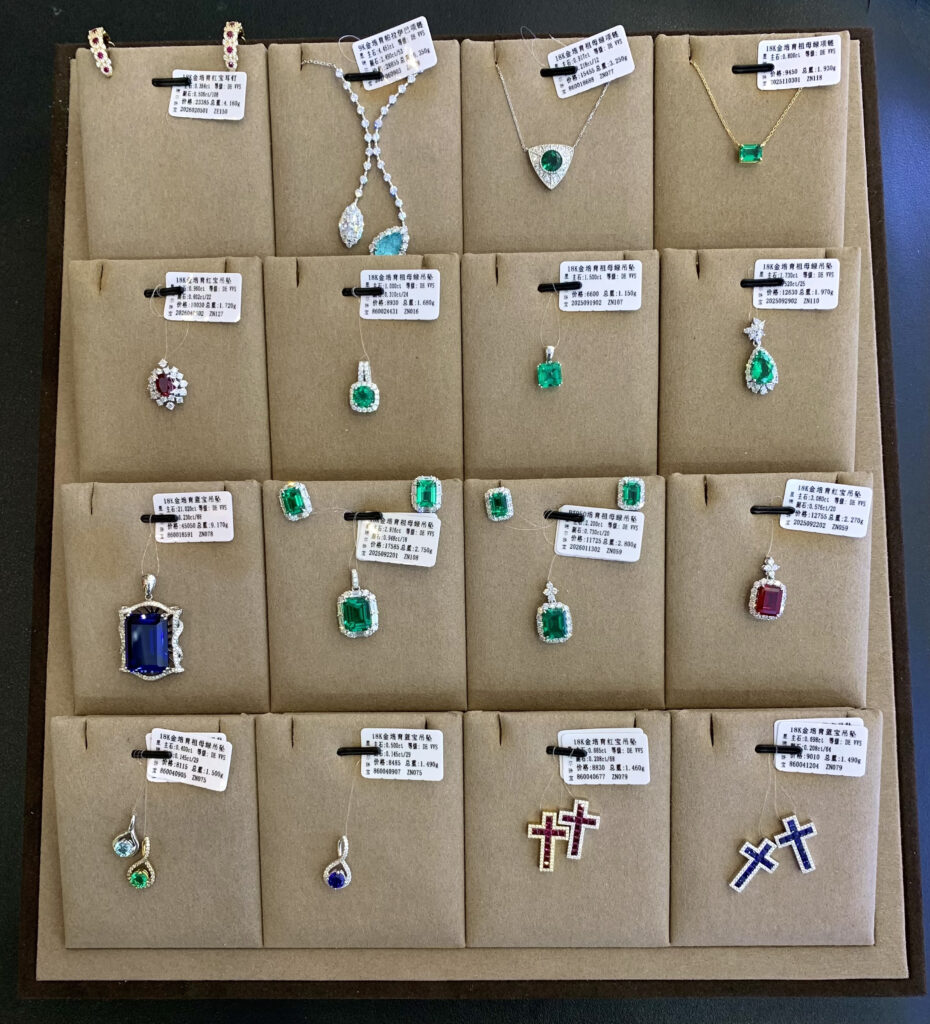
wholesale lab created gemstones have emerged as a mainstream choice in the global jewelry wholesale market, gradually replacing part of natural gemstone market share and becoming a hot-selling raw material and finished product category for bulk procurement. Lab created gemstones, including lab-grown diamonds, sapphires, rubies, emeralds and various semi-precious colored gemstones, are cultivated through advanced technological simulation of natural gemstone formation environments. They feature the same physical properties, optical effects and visual appearance as natural gemstones, with flawless clarity, uniform color and stable quality that are far more controllable than natural ones.
For wholesale buyers, the advantages of purchasing lab created gemstones in bulk are extremely prominent. First, the price is only 20% to 40% of natural gemstones of the same specification, greatly reducing the overall procurement cost and lowering the threshold for merchants to launch high-end gemstone jewelry. Second, mass industrial production realizes sufficient stock and stable supply, completely avoiding the out-of-stock and specification mismatch problems caused by natural gemstone resource scarcity. Third, lab created gemstones support customized cutting, color tuning and size matching, which can meet the personalized design needs of different jewelry styles and market positioning. In addition, modern consumers are increasingly advocating environmental protection and sustainable consumption, and lab created gemstones, which do not involve mineral mining and conflict resource issues, are more in line with contemporary green consumption concepts, helping merchants enhance brand image and market acceptance.
Market Demand and Product Features of Bulk Bridesmaid Jewelry Sets
The wedding accessory market is a high-demand segmented track in the gemstone jewelry wholesale industry, with group wedding jewelry orders maintaining explosive growth all year round. Among them, bridesmaid jewelry sets in bulk have become a must-have product for wedding planners, bridal shops and fashion jewelry retailers. A complete bridesmaid jewelry set usually includes matched necklaces, earrings, bracelets and hair ornaments, adopting soft-colored gemstones such as morganite, amethyst, pearl and light blue sapphire, with delicate and versatile designs that can match various styles of bridesmaid dresses, from minimalist casual styles to elegant formal wedding styles.
Bulk procurement of bridesmaid jewelry sets has unique industry characteristics. Wedding scenarios require unified and coordinated jewelry styles, so bulk orders demand high consistency in product color, size, luster and workmanship. Professional wholesale suppliers will provide unified batch production for bulk orders, ensuring no color difference or quality deviation between each set of jewelry. Meanwhile, considering the diverse wedding themes, suppliers support mixed batch procurement of different styles and color systems, allowing buyers to flexibly stock classic versatile styles and trendy seasonal styles. In addition, most bulk bridesmaid jewelry sets adopt fine electroplating technology and high-quality alloy or silver base materials, which are durable, not easy to fade, and suitable for one-time wedding use and daily repeated wearing, greatly improving product cost performance and consumer repurchase rate.
Professional Procurement Guide for Wedding Jewelry Set Wholesale
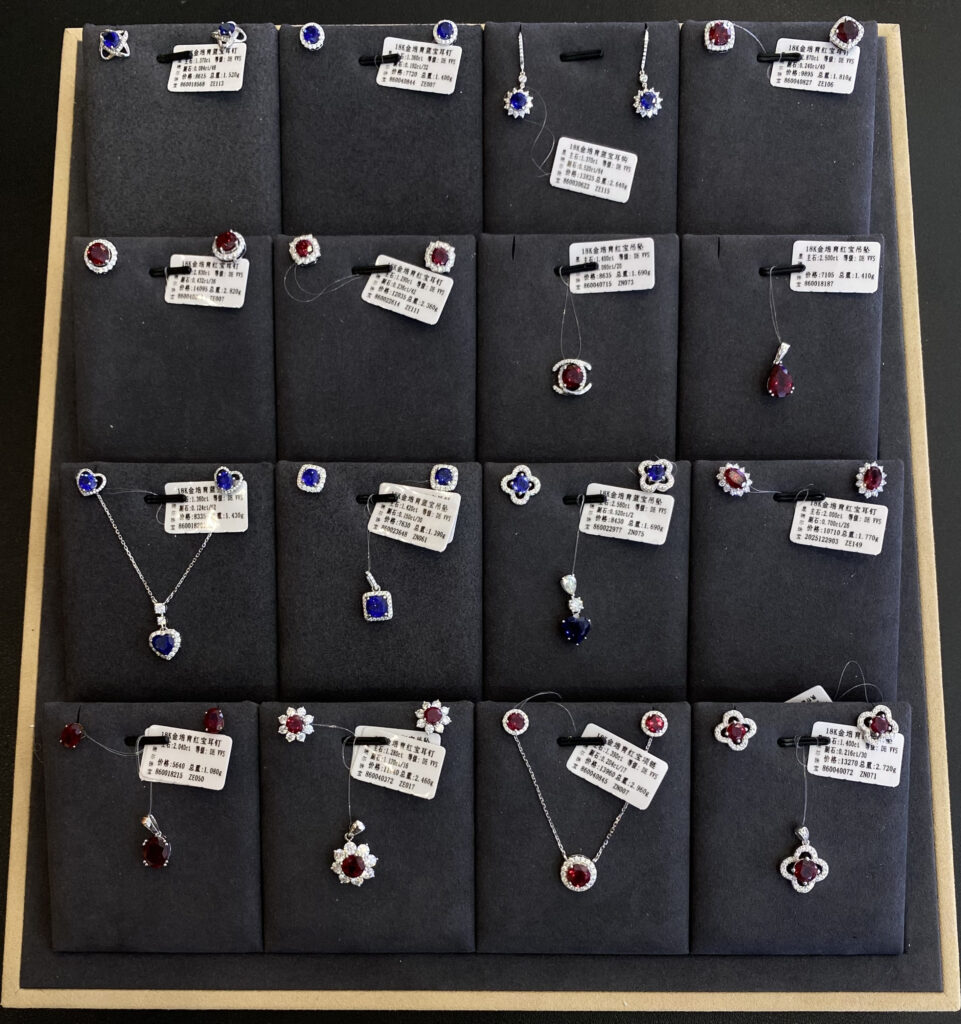
Complete wedding matching jewelry is an indispensable part of wedding ceremonies, covering bride formal wear sets, groom matching accessories, wedding guest jewelry and full-set wedding ceremonial ornaments. wedding jewelry set wholesale services focus on customized and serialized product supply, providing one-stop procurement solutions for wedding industry practitioners and jewelry merchants. Different from single-piece fashion jewelry, wedding jewelry sets have higher requirements on design sense, ceremonial sense and matching degree, usually adopting high-clarity lab created gemstones, matched with fine silver, white gold or rose gold plating, with inlaid and carved craftsmanship to highlight romantic and elegant wedding attributes.
In terms of product classification, wholesale wedding jewelry sets are divided into minimalist daily wedding sets, luxury high-end wedding sets and European and American retro wedding sets, covering low, medium and high-end market positioning. For bulk buyers, choosing professional wholesale wedding jewelry supply can effectively solve the problems of scattered procurement, inconsistent style and high single-piece cost. Regular suppliers provide flexible minimum order quantities, supporting small-batch trial orders for new merchants and large-batch customized orders for mature bridal shops. Meanwhile, they support personalized services such as engraving wedding dates, customizing exclusive gemstone colors and adjusting set combinations, helping buyers meet the differentiated customization needs of end customers and improve market competitiveness.
Key Criteria for Selecting a Qualified Wholesale Gemstone Jewelry Supplier
With the continuous expansion of the gemstone jewelry wholesale market, the number of suppliers continues to increase, and choosing a reliable partner is crucial to the long-term development of buyer businesses. First of all, buyers need to verify the supplier’s production strength and quality control system. Formal wholesale gemstone jewelry suppliers have complete production lines from gemstone cutting and polishing to jewelry inlay and finished product inspection, and can provide gemstone quality inspection certificates to ensure that product quality meets international standards. Second, product diversity and update speed are important evaluation indicators. Excellent suppliers keep up with global fashion and wedding trends, launch new styles every month, and cover lab created gemstone raw materials, finished fashion jewelry, and serialized wedding jewelry sets to meet one-stop procurement needs.
Third, after-sales service and order flexibility determine procurement experience. High-quality wholesale suppliers support bulk discount policies, mixed batch ordering, customized processing and perfect after-sales replacement services, which can effectively reduce buyer’s inventory pressure and operational risks. Finally, supply chain stability is the core guarantee of long-term cooperation. Powerful suppliers have stable raw material supply channels for lab created gemstones, sufficient finished product inventory and standardized logistics distribution systems, which can ensure timely delivery of bulk orders and avoid affecting the buyer’s sales cycle and customer reputation.
Future Development Trends of the Industry
As environmental protection consumption and affordable luxury concepts continue to gain popularity, lab created gemstone jewelry will further occupy the mainstream wholesale market. The wedding jewelry segment will develop towards more personalized, serialized and customized directions, and the market demand for bulk bridesmaid jewelry sets and complete wedding jewelry sets will continue to rise. In the future, professional wholesale gemstone jewelry suppliers will further integrate digital technology, realize full-process traceability of gemstone products, and provide more accurate customized services and efficient supply chain solutions for global buyers. For jewelry merchants, actively cooperating with formal wholesale suppliers and grasping the trend of lab created gemstone and wedding bulk jewelry markets will become an important way to expand market share and improve profit margins.
Professional Wholesale Solutions of Lab Grown Gemstones
The global jewelry industry has undergone a significant transformation in recent years, shifting from over-reliance on rare natural gemstones to sustainable, cost-effective, and high-quality artificial gem alternatives. With growing consumer awareness of ethical sourcing, environmental protection, and affordable luxury, lab cultivated gemstones have become the core choice for mid-to-high-end jewelry retailers, designers, and brand operators worldwide. Unlike natural gemstones that require millions of years of geological formation and complex mining processes, modern laboratory gemstone manufacturing technology replicates the earth’s natural high-temperature and high-pressure growth environment, producing gemstones with identical chemical composition, physical properties, and optical effects as natural ones. This revolutionary production mode not only avoids the ecological damage and ethical disputes caused by traditional gem mining but also stabilizes market supply and standardizes product quality, laying a solid foundation for large-scale wholesale trading. As a reliable wholesale gemstone jewelry manufacturer, professional factories integrate gem cultivation, cutting, polishing, inlaying, and finished product customization to provide one-stop supply services for global B2B customers.
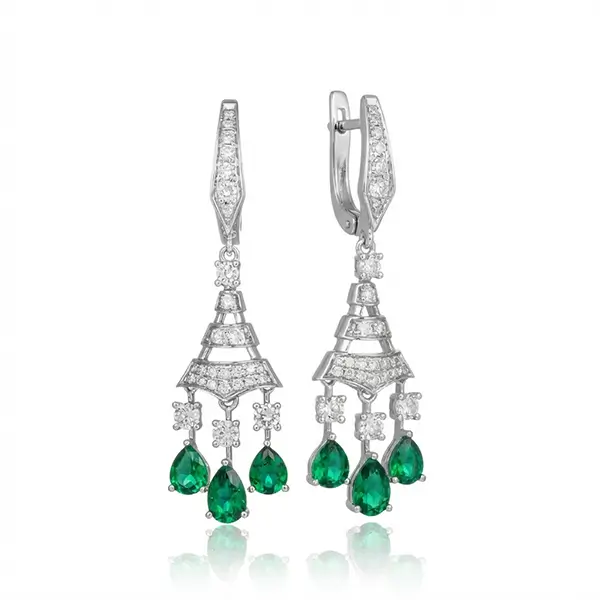
In the current competitive jewelry wholesale market, homogenized low-end products can no longer meet consumer demand for personalized, high-clarity, and pure-color gem jewelry. More merchants tend to cooperate with standardized manufacturers to obtain stable, high-quality, and cost-effective gem raw materials and finished jewelry. Among various procurement channels, lab grown gemstones wholesale has become the most popular procurement model for small and medium-sized jewelry enterprises and cross-border sellers. This wholesale model eliminates intermediate circulation links, directly connecting laboratories and processing factories with terminal buyers, effectively reducing procurement costs by 30% to 50% compared with natural gemstone transactions, while ensuring stable batch supply and customizable specifications.
Core Advantages and Product Characteristics of Classic Lab Grown Colored Gemstones
Classic colored gemstones have always been the mainstream of high-end jewelry design, and laboratory cultivation technology has achieved mature mass production of sapphires, emeralds, and rubies, three most popular colored gem varieties in the market. Each type of lab grown gemstone has unique texture, color, and application scenarios, perfectly matching the diverse design needs of fashion jewelry, high-end custom accessories, and ceremonial jewelry.
As one of the most versatile high-end colored gemstones, lab grown sapphire gemstone is favored by designers for its rich color spectrum, excellent hardness, and strong light refraction performance. Lab grown sapphires cover classic royal blue, sky blue, pink, yellow, padparadscha and other rare color systems, with uniform color distribution, high clarity, and almost no natural inclusions or cracks. With a Mohs hardness of 9, second only to diamonds, lab grown sapphires have strong wear resistance and stable physical properties, suitable for making rings, necklaces, earrings, and bracelets that are worn daily. In wholesale transactions, lab grown sapphires support customized cutting shapes including round, oval, cushion, emerald, and radiant cuts, with complete specifications ranging from small carat micro-set stones to large carat main stones, meeting the differentiated inventory needs of different jewelry brands.
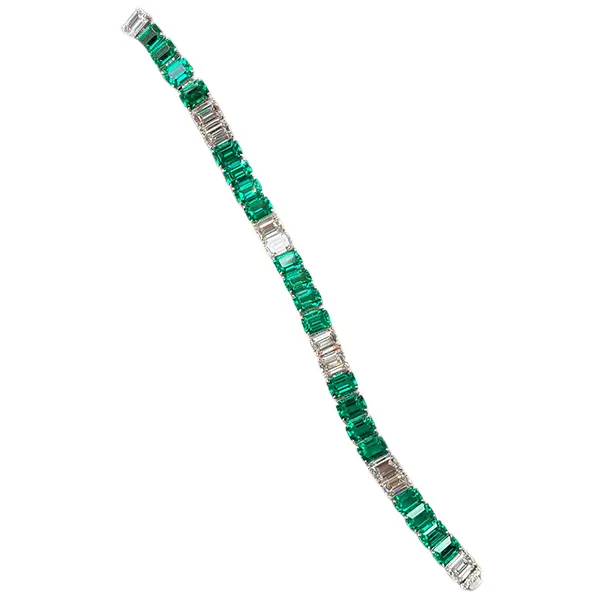
Known as the “stone of vitality”, lab grown emerald gemstone features unique fresh green tones and elegant texture, which is irreplaceable in vintage and minimalist jewelry design. Natural emeralds are prone to cotton cracks and inclusions, and most require oil immersion optimization to improve appearance, while lab grown emeralds are cultivated in a controlled laboratory environment with pure and saturated color, ultra-high clarity, and stable internal structure without post-processing optimization. Its moderate hardness and delicate luster make it widely used in light luxury jewelry and high-end custom ornaments. Wholesale lab grown emeralds adopt standardized grading standards in terms of color saturation, clarity, and cutting precision, enabling buyers to quickly select qualified products according to brand positioning and market demand, greatly improving procurement efficiency.
lab grown ruby, representing passion and nobility, is a core material for high-end ceremonial jewelry and classic vintage jewelry. Natural high-quality rubies are extremely scarce and expensive, with uneven color and more internal flaws, while lab grown rubies have pure and vivid pigeon blood red, bright luster, and perfect crystal integrity. The laboratory adopts mature flame fusion and hydrothermal growth technology to precisely control the trace element content in the gemstone, ensuring that each batch of rubies has consistent color and quality. In the wholesale market, lab grown rubies are widely used in wedding rings, anniversary jewelry, and high-end gift customization, with stable batch quality and far lower price than natural rubies, helping jewelry merchants create high-cost-performance high-end product lines and expand market share.
Professional Manufacturing and Wholesale Service System of Gemstone Jewelry Manufacturers
A professional wholesale gemstone jewelry manufacturer is not only a supplier of loose lab grown gemstones but also a comprehensive service provider integrating design, processing, customization, and after-sales service. Formal manufacturers have independent gem cultivation laboratories, precision processing workshops, and strict quality inspection systems. From raw material proportioning, crystal growth, rough cutting, fine polishing to metal inlay and finished product testing, every link implements standardized process management to ensure that each loose stone and finished jewelry meets international gem grading standards.
In terms of wholesale services, lab grown gemstones wholesale business supports flexible order modes, covering bulk raw material procurement for processing factories, small-batch mixed batch procurement for retail brands, and personalized customized finished jewelry orders for designer studios. Whether customers need bulk conventional specification loose stones or exclusive cut and color customized gemstones, manufacturers can complete production and delivery efficiently. In addition, regular wholesale manufacturers provide complete product inspection reports, gem identification certificates, and batch quality guarantee services, solving the quality and credibility concerns of cross-border e-commerce sellers and physical store merchants.
In terms of market competitiveness, lab grown gemstone jewelry has obvious advantages in environmental protection, ethics, cost and diversity. It avoids the environmental damage caused by natural gem mining and the human rights problems in the mining industry, conforming to the global sustainable consumption trend. At the same time, the rich and stable supply of lab grown sapphire gemstone, lab grown emerald gemstone and lab grown ruby enables jewelry brands to launch updated and diversified product lines quickly, getting rid of the inventory pressure and product homogenization problems caused by the scarcity of natural gemstones.
Future Development Trends of Lab Grown Gemstone Wholesale Industry
With the continuous upgrading of laboratory gem cultivation technology and the gradual standardization of the industry chain, the market share of lab grown colored gemstones will continue to expand. Consumers’ cognition of lab grown gemstones has shifted from “artificial substitutes” to “independent high-quality gem varieties”, and more consumers recognize their high cost performance and ethical value. For jewelry wholesale practitioners, cooperating with professional wholesale gemstone jewelry manufacturers and choosing stable lab grown gemstones wholesale channels will become the inevitable trend of business upgrading.
In the future, the industry will further develop in the direction of high precision, personalization and intelligence. Manufacturers will continue to optimize the growth process of lab grown sapphire gemstone, lab grown emerald gemstone and lab grown ruby, develop more rare color varieties and special cutting processes, and support more personalized jewelry design and mass customization. Meanwhile, with the improvement of industry certification standards, the product quality and market credibility of lab grown gemstones will be further improved, helping global jewelry brands achieve sustainable and profitable development in the fiercely competitive market.