Quality, Pricing and Jewelry Applications of Lab Grown Ruby
Many jewelry enthusiasts and buyers struggle to distinguish and choose between lab grown ruby vs natural rubies, as the two share identical chemical composition, physical hardness and optical properties while possessing fundamental differences in formation, rarity and value. Natural rubies are forged by millions of years of geological movements deep in the earth’s crust, forming under extreme high temperature and pressure. They naturally contain unique mineral inclusions, tiny fissures and color variations, making every natural ruby a one-of-a-kind gemstone with irreplicable natural charm. Most high-quality natural rubies also require heat treatment to optimize color and clarity, and large, eye-clean vivid red natural rubies are extremely scarce in the global gem market.
In contrast, lab grown rubies are cultivated in controlled laboratory environments using advanced flux growth and hydrothermal methods, simulating the natural formation process of rubies in a short period of weeks or months. These cultivated rubies boast highly uniform color, flawless clarity and stable texture, without the random defects common in natural stones. In terms of durability, both types score 9 on the Mohs hardness scale, offering excellent scratch resistance suitable for daily jewelry wear. The most prominent gap lies in rarity and production sustainability: natural ruby mining is limited by mineral reserves and mining conditions, while lab grown rubies support stable and large-scale production, avoiding the environmental damage and ethical issues associated with traditional gem mining.
Transparent Breakdown of Lab Grown Ruby Price Per Carat
Price is the most intuitive advantage of lab grown rubies, and understanding the specific lab grown ruby price per carat helps buyers make cost-effective purchasing decisions. Unlike natural rubies whose prices surge exponentially with carat weight, color grade and clarity, lab grown ruby pricing follows a linear and stable growth pattern. Entry-level 1-carat lab grown rubies with standard vivid red color and eye-clean clarity are priced between $150 to $200 per carat, while high-grade vivid pigeon blood red stones with perfect clarity range from $300 to $800 per carat. Even premium 3 to 5-carat high-quality lab grown rubies rarely exceed $1,000 per carat.
In sharp comparison, a 1-carat high-quality natural ruby starts at $2,000, and collector-grade large natural rubies can reach tens of thousands of dollars per carat. Overall, lab grown rubies only cost 10% to 30% of natural rubies with identical visual quality. The stable pricing system makes them ideal for daily wear jewelry, customized accessories and commercial jewelry batches, eliminating the huge premium caused by natural gem rarity and market speculation.
Classic Styling of Lab Grown Ruby Rings for Women
As a classic symbol of passion, elegance and nobility, rubies are highly favored in women’s jewelry, and lab grown ruby rings for women have become a mainstream choice for modern female consumers. Benefiting from the controllable quality and diverse specifications of lab grown rubies, these rings cover rich styles suitable for different scenarios and aesthetics. Minimalist solitaire designs with single round or oval lab grown rubies are perfect for daily casual wear, highlighting delicate and low-key temperament without losing a sense of refinement.
For formal occasions and romantic scenarios, halo-set and three-stone lab grown ruby rings are extremely popular. Surrounded by sparkling simulated diamonds or white sapphires, the bright red tone of rubies is fully accentuated, creating a luxurious and romantic visual effect. Vintage-style lab grown ruby rings with carved gold details and split shank designs cater to the preference for retro elegance, while slim band stackable styles meet the trendy matching needs of young women. All styles retain the brilliant luster and pure color of high-end rubies, allowing women to own high-looking, high-durability ruby rings at an affordable price.
High-End Daily Wear of Lab Grown Ruby Necklace Gold
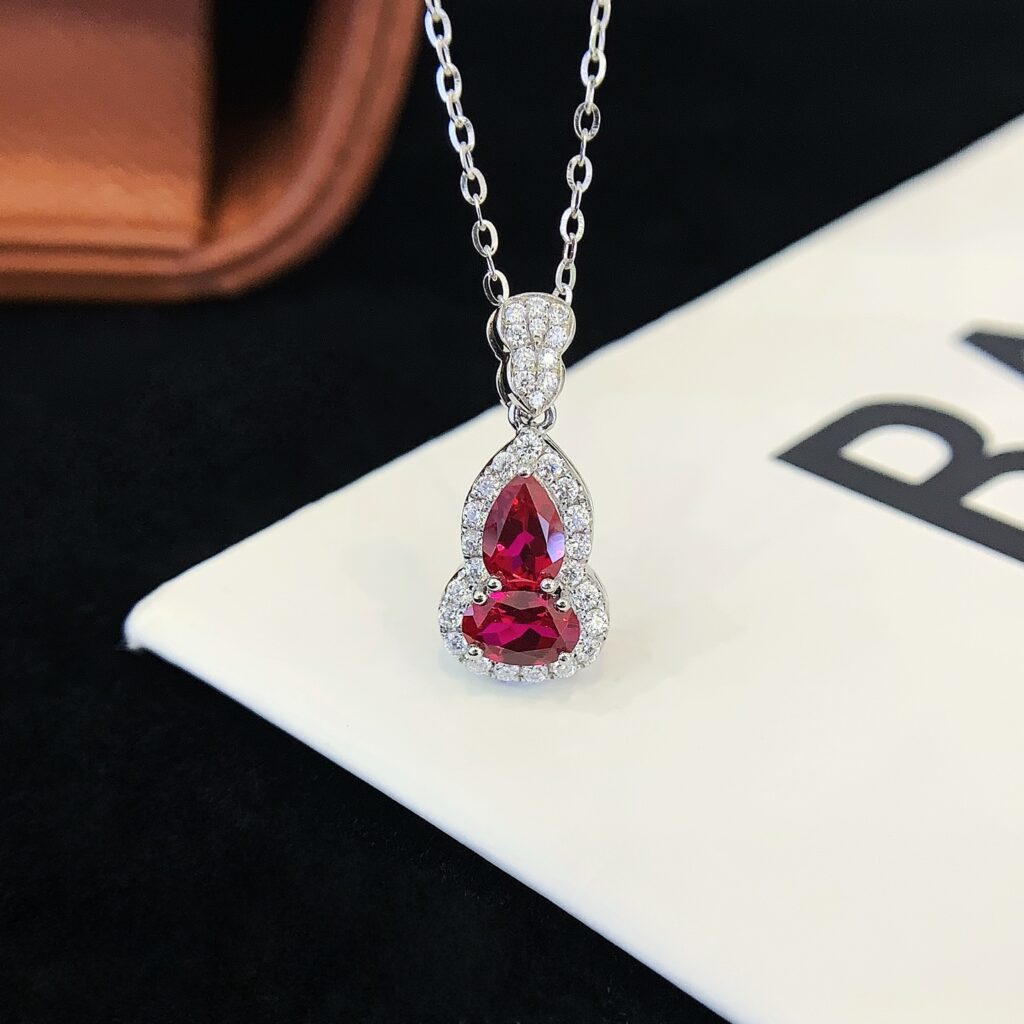
Gold jewelry perfectly complements the warm red tone of rubies, and lab grown ruby necklace gold series has become a versatile staple in modern women’s jewelry boxes. Matching lab grown rubies with 14K or 18K solid gold frames not only enhances the texture and durability of the necklace but also creates a classic color contrast that never goes out of style. The gold metal’s warm luster neutralizes the bright red of rubies, presenting an elegant and gentle temperament suitable for commuting, dating, banquets and daily leisure wear.
The product line of gold necklaces with lab grown rubies is diverse, including delicate pendant necklaces with small carat rubies for daily subtle embellishment, clavicle chain styles with multi-stone inlay for layered matching, and large-size main stone pendant necklaces for formal occasion styling. Lab grown rubies used in gold neckies feature uniform color and flawless surface, ensuring consistent and exquisite overall jewelry texture. Meanwhile, the cost advantage of lab grown rubies allows gold ruby necklaces to maintain high-end appearance and quality at a much lower price than natural ruby gold necklaces, making high-end gemstone gold jewelry accessible to more consumers.
Commercial Value and Application of Bulk Lab Grown Ruby
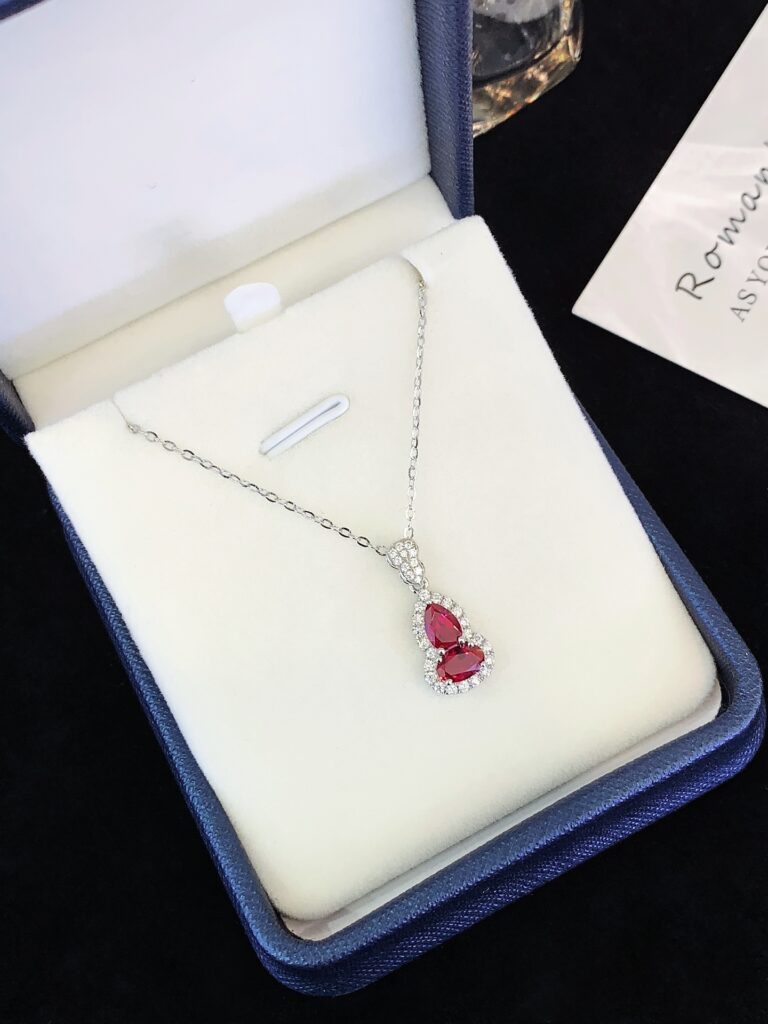
For jewelry brands, processing factories and wholesale merchants,bulk lab grown ruby provides stable, high-quality and cost-effective raw material support for large-scale jewelry production and commercial sales. Different from the limited supply and unstable quality of bulk natural rubies, bulk lab grown rubies can be customized in batches according to specific parameters, including unified carat weight, color grade, clarity and cutting style, realizing standardized jewelry production.
Bulk supply covers full specifications from small 0.5-carat melee stones for auxiliary inlay to large 5-carat above main stones for high-end customized jewelry. All bulk lab grown rubies are produced under strict laboratory quality control, with consistent color saturation, no obvious internal inclusions, and stable physical properties, which greatly reduces the defective rate in jewelry processing. In addition, batch procurement significantly reduces unit costs, helping jewelry businesses optimize product pricing, enrich product lines, and launch cost-effective ruby jewelry series to capture more market share. The eco-friendly and ethical production of lab grown rubies also conforms to the current global consumer pursuit of sustainable jewelry, bringing long-term brand value and market competitiveness to merchants.
Conclusion
Lab grown rubies have broken the high threshold of traditional natural ruby jewelry with their superior quality stability, transparent pricing, diverse styling and scalable production capacity. Whether for individual consumers pursuing cost-effective daily wear, including classic rings and gold necklaces, or for commercial buyers needing bulk gem raw materials, lab grown rubies show irreplaceable advantages over natural rubies. As jewelry craftsmanship continues to upgrade and consumer concepts become more rational, lab grown ruby jewelry will continue to occupy an important position in the global gem jewelry market, balancing beauty, practicality and affordability perfectly.